
Energetic customers on the Ethereum community have overtaken main layer 2s as long-term growth methods start to repay.
The variety of energetic addresses on Ethereum exceeded 791,000 on Monday, greater than that of the community’s main L2 gamers, together with Base, Arbitrum and Optimism, in response to knowledge from Nansen.
Each day common transaction prices have additionally reached new lows. On Monday, common transaction charges have been solely $0.15. The common price for a transaction on Ethereum was as excessive as $11 only one 12 months in the past.
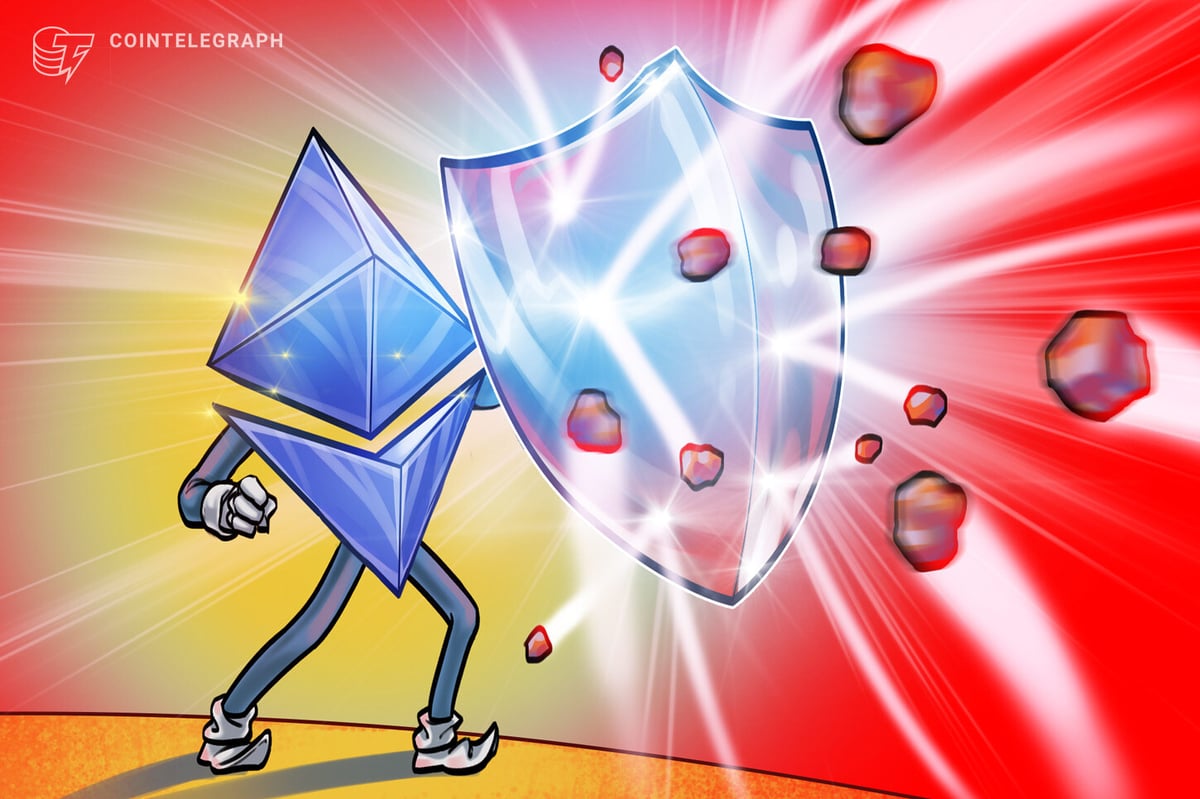
These metrics for Ethereum utility come forward of bold plans by builders to make the community bulletproof.
Energetic addresses on Ethereum overtake L2s, charges value pennies
Over the past 12 months, the variety of energetic addresses on the Ethereum community has elevated 71% from 460,000 accounts recorded a 12 months in the past.
Each day transactions on Ethereum have additionally been hitting all-time highs, and are cheaper than ever. On Tuesday, there have been 2.1 million transactions on the Ethereum blockchain with a mean transaction price of $0.15.

Transacting on Ethereum was notoriously costly within the not-so-distant previous. In late 2021 to mid-2022, when decentralized finance was exploding and the non-fungible token craze had reached its zenith, some customers reported fuel charges of over $200.
This raised questions round how usable Ethereum might actually be. Then in 2023, L2 networks exploded to scale the community as main gamers like Coinbase jumped on board. The crypto trade launched its personal L2, Base, with mainnet opening for customers in August of that 12 months.
Final 12 months noticed two main upgrades to Ethereum. In Could, the Pectra improve elevated the capability of blobs — a instrument for storing transaction knowledge. Extra blob house helps rollups put up transaction knowledge cheaper and might contribute to decrease charges.
Associated: What’s the Ethereum Prague-Electra (Pectra) improve?
Blob capability was additional elevated within the Fusaka improve, which activated on Dec. 3, 2025. Fusaka additionally launched Peer Knowledge Availability Sampling, which created a system whereby validators didn’t must obtain complete blobs, however might use small samples for transaction verification.
Along with decrease charges and extra addresses, builders at the moment are extra often selecting Ethereum as a settlement layer. In keeping with Token Terminal, the variety of new sensible contracts created and printed on Ethereum reached an all-time excessive of 8.7 million within the fourth quarter of 2025.
This indicator of future community exercise comes at a time of elevated competitors between layer 1s like Ethereum, Tron, Solana and BNB Chain. Solana and BNB Chain are the trade’s prime networks by transactions and energetic addresses, pushed largely by their excessive throughput and recognition for retail and memecoin exercise.
Because the race heats up, Ethereum builders are on the lookout for methods to future-proof the community.
Ethereum for 100 years
On Monday, Ethereum co-founder Vitalik Buterin mentioned on X that the community must get to a degree the place builders can ultimately stroll away.
He mentioned that constructing purposes is “not potential on a base layer which itself will depend on ongoing updates from a vendor with a view to proceed being usable.” Buterin mentioned that the blockchain should have “the traits that we try for in Ethereum’s purposes. Therefore, Ethereum itself should move the walkaway check.”
Associated: Ethereum should move ‘walkaway check’ to endure for 100 years: Buterin
The community is much from such some extent, and Buterin steered a variety of key components to get it “to a spot the place Ethereum’s worth proposition doesn’t strictly rely upon any options that aren’t within the protocol already.”
These included:
-
Full quantum-resistance.
-
Structure that may broaden to adequate scalability, hundreds of instances over.
-
State structure that may final a long time.
-
A general-purpose account mannequin.
-
A proof-of-stake mannequin that may “final and stay decentralized for many years.”
-
A block-building mannequin that’s proof against centralization.
Buterin added that yearly, Ethereum builders ought to “tick off a minimum of one among these packing containers, and ideally a number of.”
Associated: Ethereum in 2026: Glamsterdam and Hegota forks, L1 scaling and extra
Main adjustments are coming to Ethereum in 2026. The upcoming Glamsterdam fork will deliver excellent parallel processing to the community and likewise improve the fuel restrict to 200 million from its present 60 million. It can additionally make additional will increase to blob dimension.
Good parallel processing will purportedly improve transaction bandwidth and permit for bigger block sizes with out elevated fuel limits.

As Ethereum continues to make community upgrades, the info is displaying extra exercise on its L1. The pay-off might quickly be a community builders can stroll away from, and on which future generations of app builders can construct.
Journal: One metric exhibits crypto is now in a bear market: Carl ‘The Moon’
Cointelegraph Options and Cointelegraph Journal publish long-form journalism, evaluation and narrative reporting produced by Cointelegraph’s in-house editorial group and chosen exterior contributors with subject-matter experience. All articles are edited and reviewed by Cointelegraph editors in step with our editorial requirements. Contributions from exterior writers are commissioned for his or her expertise, analysis or perspective and don’t mirror the views of Cointelegraph as an organization until explicitly said. Content material printed in Options and Journal doesn’t represent monetary, authorized or funding recommendation. Readers ought to conduct their very own analysis and seek the advice of certified professionals the place acceptable. Cointelegraph maintains full editorial independence. The choice, commissioning and publication of Options and Journal content material should not influenced by advertisers, companions or industrial relationships.