
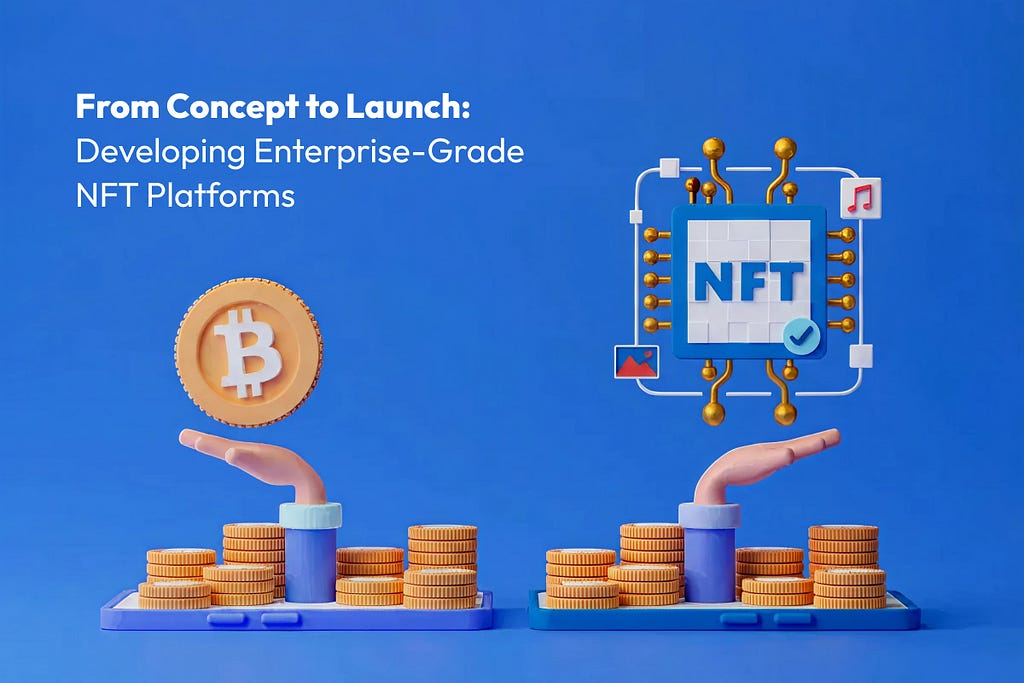
Non-fungible tokens (NFTs) have moved past digital artwork and collectibles into severe enterprise purposes. Corporations now use NFT platforms to handle digital possession, create loyalty packages, and deal with provide chain verification. An enterprise-grade NFT platform helps excessive transaction volumes, integrates with current techniques, and meets strict safety requirements. Companies construct these platforms to personal their digital belongings and open new income streams.
This information walks by means of the total strategy of NFT improvement companies, from the preliminary thought to a stay platform. Whether or not you run a retail chain wanting buyer rewards or a producer monitoring merchandise, understanding these steps helps you intend successfully. NFT improvement companies cowl all the things from sensible contract coding to person interfaces, making platforms dependable for each day operations.
Defining Your NFT Platform Targets
Begin with clear targets. Ask what drawback the platform solves. For instance, a vogue model may problem NFTs for limited-edition gadgets, letting consumers resell them on a market. An actual property agency may use NFTs to symbolize property shares, simplifying fractional possession.
Collect enter from stakeholders. Gross sales groups want options for buyer engagement; IT departments need simple integration with databases. Record key necessities, equivalent to dealing with 10,000 customers per day or supporting a number of blockchains like Ethereum and Polygon.
Set measurable objectives. Goal for transaction speeds beneath 5 seconds or prices beneath $0.01 per mint. Doc these in a mission transient. This step takes 1–2 weeks and prevents scope creep later.
Prioritize options primarily based on enterprise worth. Core ones embody pockets connections, NFT minting, and market listings. Good-to-haves like analytics dashboards come after launch.
Choosing the Proper Blockchain Community
Select a blockchain that matches your wants. Ethereum gives sturdy safety however larger charges throughout peak instances. Polygon offers quicker, cheaper transactions whereas staying suitable with Ethereum instruments.
Solana excels in pace, processing hundreds of transactions per second, ideally suited for gaming platforms. Binance Good Chain works nicely for cost-sensitive initiatives with a big person base.
Think about components like developer neighborhood dimension, device availability, and improve plans. For enterprise use, decide networks with confirmed uptime and enterprise help, equivalent to these utilized by IBM or Visa pilots.
Take a look at on testnets first. Deploy a pattern sensible contract to verify charges, pace, and compatibility. This choice shapes all the mission, so contain blockchain specialists early.
Designing the Platform Structure
Map out the system’s construction. A typical enterprise NFT platform has three layers: frontend for customers, backend for logic, and blockchain for knowledge storage.
Frontend makes use of React or Vue.js for responsive interfaces. Customers join wallets like MetaMask, browse collections, and purchase NFTs. Cellular apps constructed with React Native lengthen attain.
Backend handles off-chain duties. Node.js servers course of funds, generate metadata, and sync with databases like MongoDB. IPFS shops photos and recordsdata, pinning them through companies like Pinata for reliability.
Blockchain layer contains sensible contracts for minting, transferring, and royalties. Use Solidity for Ethereum-based chains. Off-chain oracles like Chainlink fetch real-world knowledge, equivalent to inventory costs for dynamic NFTs.
Draw diagrams utilizing instruments like Lucidchart. Present knowledge flows from person clicks to blockchain writes. Plan for scalability with load balancers and microservices.
Constructing Safe Good Contracts
Good contracts kind the platform’s core. They outline NFT guidelines, like possession switch or computerized royalties.
Begin with audits in thoughts. Use OpenZeppelin’s ERC-721 or ERC-1155 requirements as bases. These templates embody confirmed capabilities for minting and burning tokens.
Code possession checks to stop unauthorized mints. Add pause capabilities for emergencies, permitting homeowners to halt transfers if points come up.
Take a look at rigorously. Write unit exams with Hardhat or Foundry, overlaying edge instances like zero-value transfers. Run fuzz exams to simulate random inputs.
Get skilled audits from corporations like Certik or PeckShield. They evaluate for reentrancy assaults or integer overflows. Funds 5–10% of improvement prices for this.
Deploy with multisig wallets. Require a number of approvals for upgrades, lowering single-point failures.
Creating Consumer-Pleasant Interfaces
Design interfaces that work for non-technical customers. Dashboard reveals pockets steadiness, owned NFTs, and exercise historical past.
Minting web page contains previews, amount selectors, and gasoline estimates. Market lists gadgets with filters for value, rarity, and traits.
Use clear layouts with giant buttons and clear labels. Accessibility options like alt textual content and keyboard navigation broaden enchantment.
Combine social logins alongside wallets. Electronic mail verification speeds onboarding for first-timers.
Prototype with Figma. Collect suggestions from 10–20 potential customers. Iterate primarily based on their enter, specializing in pace and ease.
Integrating Fee and Pockets Methods
Funds transcend crypto. Assist bank cards through Stripe, changing to stablecoins on-chain.
Pockets integrations use Web3 libraries like ethers.js. Customers approve transactions with one click on.
Add fiat ramps like MoonPay for purchasing crypto straight. This lowers boundaries for conventional companies.
Deal with gasoline charges well. Batch transactions or subsidize prices for premium customers.
Adjust to KYC/AML guidelines. Use companies like Persona to confirm high-value customers.
Implementing Metadata and IPFS Storage
NFTs hyperlink to metadata JSON recordsdata detailing identify, description, and traits. Retailer these on IPFS for decentralization.
Generate metadata dynamically. For 10,000 NFTs, use scripts to mix base photos with layers like hats or colours.
Pin recordsdata to IPFS gateways. Providers like Filecoin guarantee availability even when nodes go offline.
Replace metadata post-mint with contract capabilities. This enables evolving traits primarily based on real-world occasions.
Validate metadata in opposition to requirements. Instruments like NFT-Metadata-Validator catch errors earlier than launch.
Including Analytics and Reporting Instruments
Monitor platform efficiency with built-in analytics. Google Analytics screens person flows; Dune offers on-chain metrics like mint quantity.
Customized dashboards present income, person progress, and retention. Combine with Tableau for enterprise reporting.
Alert on anomalies, equivalent to sudden price spikes. Use instruments like Sentry for error monitoring.
Companies acquire insights into well-liked collections, informing future drops.
Testing for Reliability and Safety
Testing prevents launch-day failures. Run unit exams on particular person parts, integration exams on full flows.
Simulate load with 1,000 concurrent customers utilizing Artillery. Examine for bottlenecks in backend or blockchain.
Safety exams embody penetration scans with instruments like OWASP ZAP. Bug bounties on platforms like Immunefi invite hackers to search out flaws.
Consumer acceptance testing (UAT) includes shoppers attempting the beta. Repair points earlier than mainnet deployment.
Conduct dry runs on testnets, minting real-scale volumes.
Launching the Platform
Deployment begins with staging. Mirror manufacturing on testnet, invite beta customers.
Go stay in phases. Launch minting first, add market after a week.
Announce through e-mail lists, social media, and PR. Companion with influencers for visibility.
Monitor post-launch with 24/7 help. Use PagerDuty for alerts.
Scale servers routinely with AWS or Google Cloud.
Sustaining and Updating the Platform
Publish-launch work retains the platform operating. Common sensible contract upgrades add options through proxies.
Patch vulnerabilities promptly. Monitor blockchain forks and regulate.
Collect person suggestions by means of surveys. Launch updates quarterly.
Backup knowledge off-chain. Plan for catastrophe restoration.
Enterprise shoppers count on 99.9% uptime, so put money into redundancy.
Actual-World Examples of Success
A significant sports activities league constructed an NFT platform for fan memorabilia. They used Polygon for low charges, minting thousands and thousands of things. Followers traded jerseys tied to actual participant stats, boosting engagement.
A wine producer issued NFTs for uncommon bottles. Every token tracked provenance from winery to purchaser, lowering fraud.
These instances present NFTs match industries like leisure, luxurious items, and logistics.
Prices and Timelines for Growth
Anticipate 3–6 months for a full platform. Prices vary from $100,000 to $500,000, relying on options.
Breakdown: 40% sensible contracts and audits, 30% frontend/backend, 20% design/testing, 10% deployment.
Ongoing prices embody internet hosting ($1,000/month), gasoline subsidies, and upkeep.
Startups save through the use of no-code instruments like Thirdweb initially, then customizing.
Frequent Challenges and Options
Excessive gasoline charges plague Ethereum launches. Answer: Layer 2 networks or price abstraction.
Scalability limits person progress. Use IPFS for storage and CDNs for supply.
Regulatory uncertainty impacts some areas. Seek the advice of attorneys for token classification.
Consumer adoption lags with out advertising. Construct communities on Discord early.
Future Traits in Enterprise NFT Platforms
Cross-chain bridges will hyperlink ecosystems, letting NFTs transfer freely.
AI will generate dynamic traits, like NFTs that change with market knowledge.
Zero-knowledge proofs will add privateness for enterprise knowledge.
Integration with conventional ERP techniques will develop.
Staying forward means following developments from Ethereum Basis and Polygon labs.
Able to construct your enterprise-grade NFT platform? Contact Codezeros for professional NFT improvement companies. Our group guides you from idea to launch, delivering safe, scalable options for your corporation.
From Idea to Launch: Growing Enterprise-Grade NFT Platforms was initially revealed in Coinmonks on Medium, the place persons are persevering with the dialog by highlighting and responding to this story.